
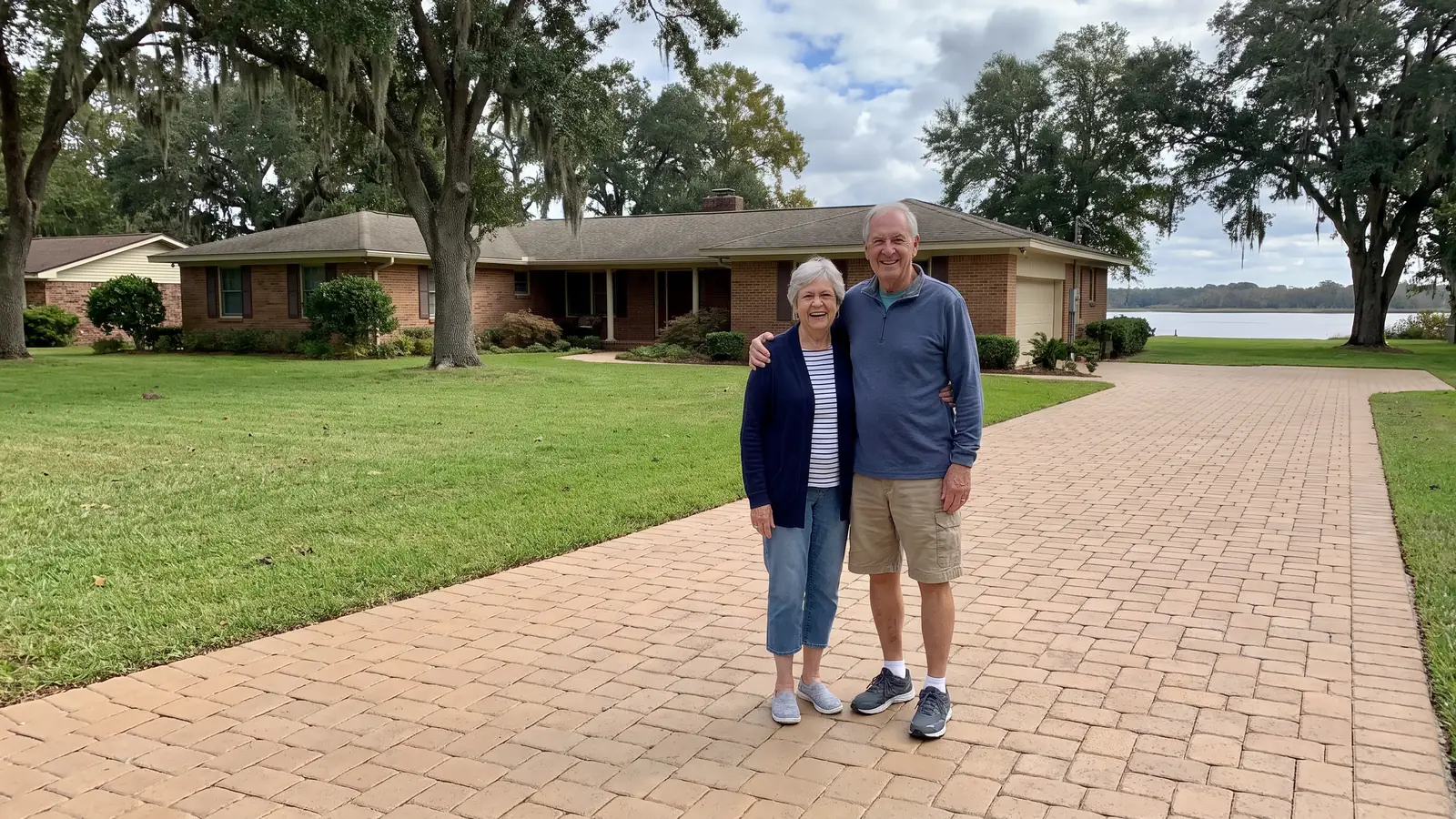
Paver sealing for Jacksonville Beach homes
Paver Sealing in Jacksonville Beach, FL
Jacksonville Beach has notable mid-century modern homes, so ask a contractor about a matte finish; call (904) 621-4308.
- Brings out deeper paver color
- Fresh joint sand helps lock pavers in place
- Gives weeds less room to grow
- Makes the surface easier to keep clean
- Free estimate, no obligation
Request a Free Estimate
Free, no obligation.
Fast, careful paver sealing in Jacksonville Beach
Paver sealing is available in Jacksonville Beach, from the blocks near Latham Plaza to the streets off Penman Road. The estimate for a driveway, walkway or pool deck is free, and a local contractor quotes the wash, the sand and the coat together. When you request your free estimate, you can count on a reply inside 1 business day, usually much sooner.
Sea air leaves driveways chalky, with sand missing from the joints and a gray film on the stone. Washed, re-sanded and sealed, the same pavers show one clean, even color again. Call (904) 621-4308 and describe what you see, and there is no obligation to book anything. Pavers by the beach pick up sand and salt quickly, so a wash and a refill reset the surface.
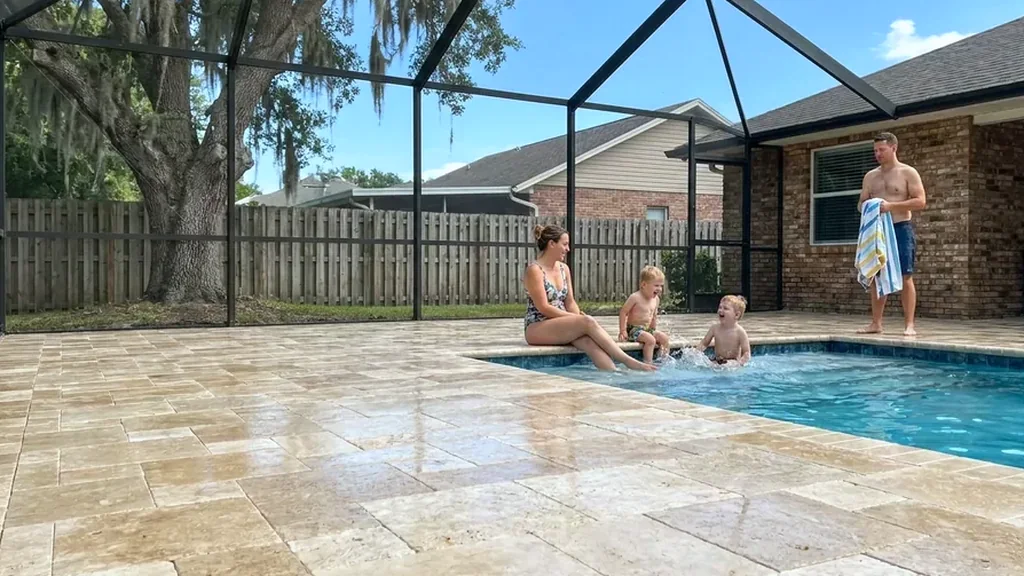
Why hire a local paver sealing contractor in Jacksonville Beach?
Salt, sand and storm water all reach pavers in a city that is two-thirds water. To hear how a contractor from the Beaches plans for that, request your free estimate, and the estimate is free.
A free walk-through
A free walk-through of your Jacksonville Beach driveway, walkway or pool deck comes with a price. Whether to book is up to you.
A published range
Northeast Florida rates for clean, sand and seal are commonly published at $1.75 to $3.25 per square foot. Hold a Jacksonville Beach bid against that.
A finish that fits the house
Matte keeps the natural look and is safest near pools. A wet look deepens color but shows scuffs sooner. The choice is yours.
Quick replies
Replies land within 1 business day, usually much sooner. The schedule is yours to set.
Get Your Free Estimate in Jacksonville Beach
Tell us about your pavers in Jacksonville Beach.
Free, no obligation
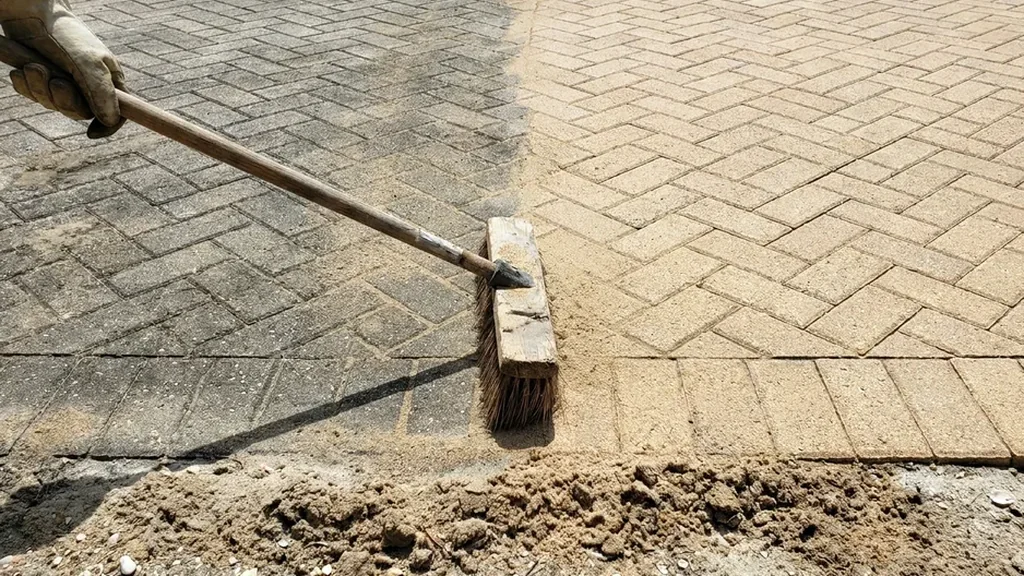
What paver problems show up most in Jacksonville Beach?
Salt that dulls pale pavers
A paver maker says salt travels as airborne particles that crystallize on surfaces as moisture evaporates. It says pale pavers show splash marks, salt residue and sand more quickly, and that routine rinsing helps in coastal regions. Jacksonville Beach is two-thirds water, so the air carries salt almost everywhere in town. A dull, chalky look on your driveway is the usual first sign. A University of Florida page says coastal sites deal with winds, inescapable salt and sandy high-pH soils. Jacksonville Beach covers 7.316 square miles of land and 14.648 of water. A paver maker adds that efflorescence can occur as moisture moves through cement products, which shows up as a white residue. Casa Marina Hotel, built in 1925, has stood in this salt air for about a century.
Rain that floods low driveways
On December 6, 2016, 1.76 inches of rain fell at the airport and part of First Avenue South in Jacksonville Beach sat underwater for hours. Sidewalks and driveways near 12th Avenue South flooded too, which residents said they had come to expect. Safe Touch notes that storms empty driveway joints, and a coat laid over empty joints invites weeds back. Ask the contractor to check the low side of the drive first, since that is where water sits longest. First Avenue South and 12th Avenue South are low enough to flood in a heavy rain, and residents say they expect it. Hurricane Matthew in October 2016 forced a mandatory evacuation of the city.
Older homes with a mystery coat
San Pablo Terrace homes were built from 1955 to 2005, with a median year of 1963. A house from that era did not come with pavers, so the driveway was added later, perhaps by an owner you never met. A water-based product will not go over a solvent-based one, so the contractor has to learn what is on the surface first. Where an old coat is white, hazy or flaking, a Jacksonville cost guide says it comes off before anything new goes on, at extra cost. Ocean Terrace dates to the early 1980s, so the beach has pavers of several ages side by side. The Art Moderne lifesaving station from 1947 is among the city's older surviving buildings.
A calendar with a long wet stretch
NOAA normals for Jacksonville Beach show August averaging 7.54 inches of rain, September 7.19 and June 6.79, while November averages 2.50. The hurricane season runs from June 1 to November 30 and peaks on September 10. Sealer needs a dry surface, so the drier months leave more room for a clean job. A wet week can still move any date. One Jacksonville company says spring and fall often bring the steadiest weather, though a clear stretch in winter works too. Hurricane Floyd took out the pier in 1999 and Matthew damaged it in 2016, so storm season is never far from mind here. The pier reopened in July 2022, 12 feet taller and strengthened against future storms.
Aprons that the city may rebuild
The city's urban trails FAQ says paver driveway aprons will be removed when the trail goes in, and the pavers will be replaced afterward. It also says the city standards for paver driveways were updated in October 2023. If your apron sits where the trail is planned, ask the city about timing before you pay to seal that strip. The city says its standards for paver driveways are posted on its site, so you can check what applies.
Can paver sealing be done near the ocean in Jacksonville Beach?
Yes, in every neighborhood, from San Pablo Terrace off Penman Road to Ocean Terrace near South Beach Park and the grid of South Pablo Beach. San Pablo Terrace homes date from 1955 to 2005, with a median living area of about 1,646 square feet. Streets there include Eastern Drive, 18th Avenue North, Penman Road and Arden Way. Name your street when you request your free estimate.
Ocean Terrace dates to the early 1980s and has a confirmed HOA, so check your rules before you pick a finish. South Pablo Beach is a coastal pocket near the ocean with a walkable grid, and nearby Sea Grove has 174 homes. Palm Way, Grande Boulevard and America Avenue are among the streets in Ocean Terrace. Call (904) 621-4308 to talk through your block.
The city also has a notable collection of mid-century modern homes, most notably by architect William Morgan, plus the Mission-style Casa Marina Hotel from 1925. Pavers beside those styles often look best with a quiet finish. Tell the contractor the style and age of your house when you request your free estimate, and ask about matte or a wet look. Matte shows scuffs later than a wet look, which helps on a busy drive.
What does paver sealing cost in Jacksonville Beach?
The commonly published range for clean, sand and seal in Northeast Florida is $1.75 to $3.25 per square foot. A Jacksonville Beach job is priced the same way, with salt film and sand adding washing time. Strip and reseal costs more if an old coat has failed. To see where your lot lands, request your free estimate.
A short beach-block driveway costs more per square foot than a long one, a Jacksonville cost guide says, because prep time stays the same. A pool deck or walkway added to the job spreads that setup over more area. Give a rough size for each surface when you call (904) 621-4308. Ask the contractor to state the total area so bids line up.
| Paved area | Typical example | Clean, sand and seal |
|---|---|---|
| 300 sq ft | Small patio or walkway | $525 to $975 |
| 600 sq ft | Two car driveway | $1,050 to $1,950 |
| 1,000 sq ft | Large driveway or pool deck | $1,750 to $3,250 |
| 1,500 sq ft | Driveway plus pool deck | $2,625 to $4,875 |
Math based on the $1.75 to $3.25 per square foot that Northeast Florida paver companies published as of November 2026. Your contractor sets the actual price after seeing the surface. Repairs, leveling and stripping failed sealer are usually extra.
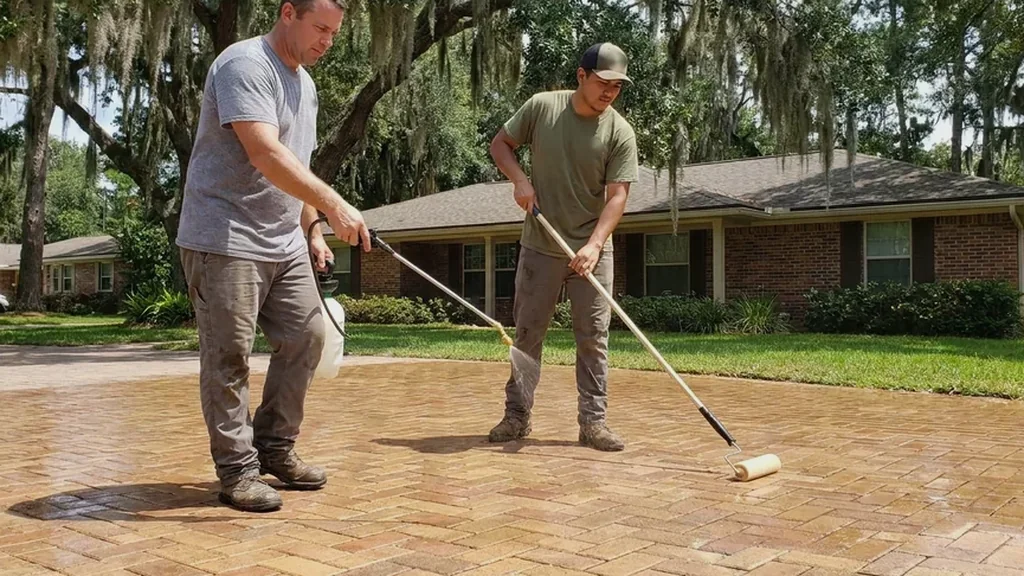
How does a paver sealing job work in Jacksonville Beach?
Check the surface and the old coat
The contractor walks your Jacksonville Beach driveway and deck, noting low joints, sunken spots, salt film and any sign of an earlier coat. Sunken sections are reset first, since sealing preserves whatever is under it. If the surface was sealed before, the product matters. The old coat limits the choice, because water-based sealer cannot go on top of solvent-based sealer.
Wash off salt and film
The wash lifts salt residue, sand and dirt, and stains are treated. A paver maker says routine rinsing helps manage buildup in coastal regions. Because washing empties the seams, fresh sand follows. Ask what the contractor expects to lighten and which marks may stay. Salt film shows up as a dull haze, which is why a rinse after storms helps.
Top up the joints with sand
Fresh sand goes into every seam, and the surface is swept clean. Safe Touch says summer storms pull sand out of pool decks and driveways, and sealing over empty joints is how weeds come back. Full joints are the answer to both. San Pablo Terrace streets such as Eastern Drive and Arden Way are on record with homes from 1955 on.
Watch the forecast
Sealer needs a dry surface, and PaverGuard adds that it should not go on right before a forecasted downpour. In a wet month, that can mean waiting for the next clear day. One Jacksonville company says a wet look can turn cloudy white if it goes on damp pavers. Waiting a day is easier than stripping a cloudy coat.
Roll on the coat and keep off
A Jacksonville company says pros spray the sealer first and then back-roll it so the coat is even and works into the joints. Shoes can touch it after a few hours, but tires wait about a day. Companies commonly quote two to five years between coats, and a pool deck needs an anti-slip additive. A wet look picks up scuffs sooner than matte. Matte shows scuffs later and suits mid-century lines, but the choice is yours.
Complete paver services in Jacksonville Beach
A Jacksonville Beach visit follows four steps: wash, re-sand, dry and seal. The wash clears salt film, sand and dirt, and fresh sand fills the joints. The coat waits until last, so dirt is never sealed in. To hear how long a visit might run on your lot, call (904) 621-4308.
A beach-block driveway, a front walk and a pool deck each wear differently. Tires and turning wear a drive faster than a patio, a Jacksonville paver company says, and a pool deck takes splash and sun. Add each surface and a rough size when you request your free estimate.
Sealers fall into film-forming types, which sit on top, and penetrating types, which soak in and leave the look unchanged. A Jacksonville paver company says matte or penetrating sealer is safest near pools. A water-based product will not go over a solvent-based one. To sort out finishes near the ocean, call (904) 621-4308.
Jacksonville Beach averages 52.44 inches of rain a year, with November the driest month, so a contractor may suggest a clear stretch. Hurricane season runs through November 30, and a storm can move any date. Plan to keep cars off for about a day afterward. For a date that works around storm season, request your free estimate.
Questions to ask before you hire
- Can you clean the grease spots under my grill before you seal?
- Will you haul off the old sand and the dirt you wash out?
- Can I still get my car in and out of the garage while the driveway dries?
- Will you take before and after photos of my pavers?
- How do you keep leaves and pine needles from landing in the wet sealer?
- Will you walk the pavers with me first and point out any cracked or stained ones?
- What do you use to put the sealer down, a sprayer or a roller?
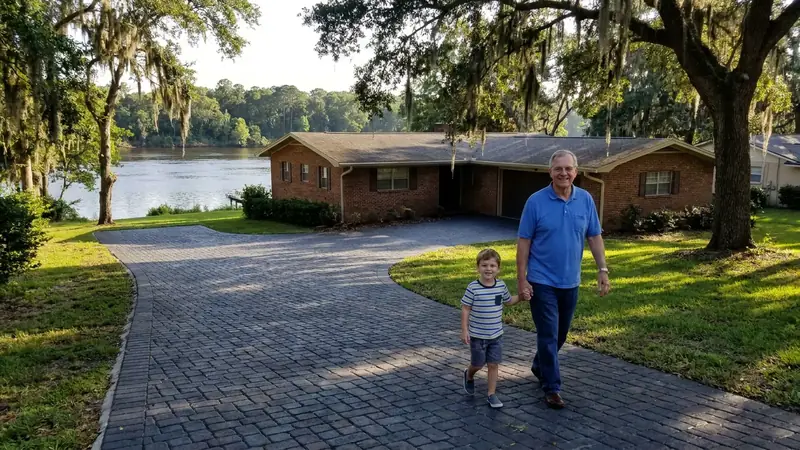
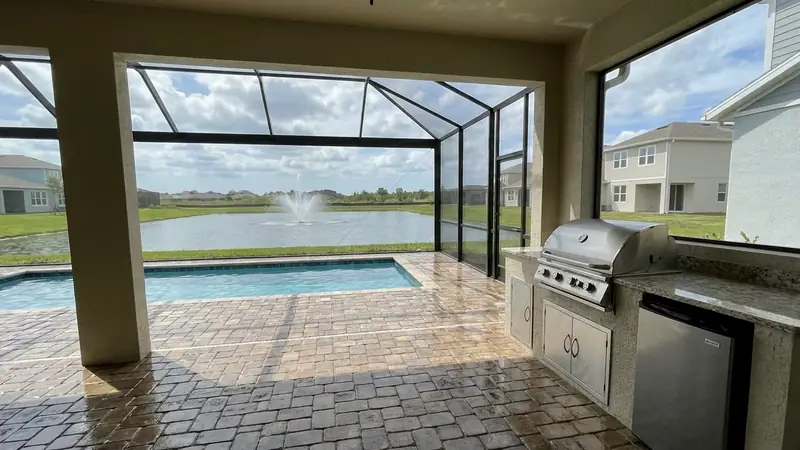
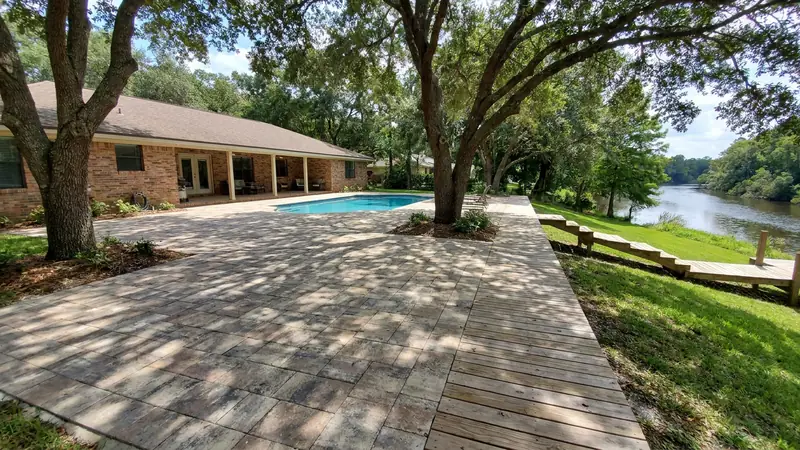
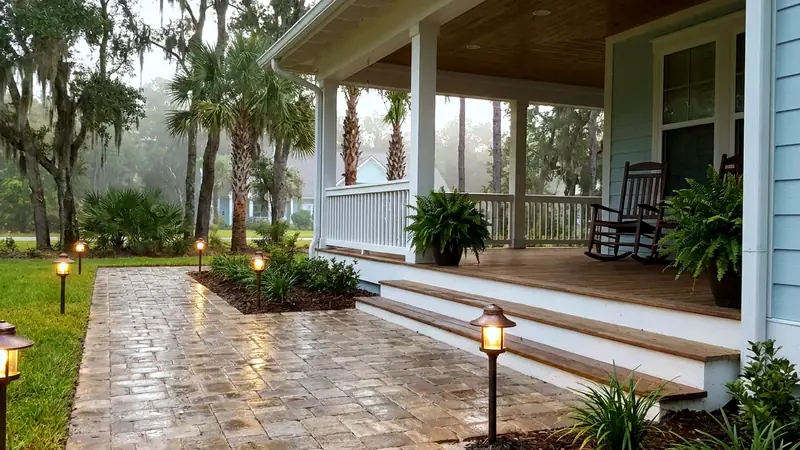
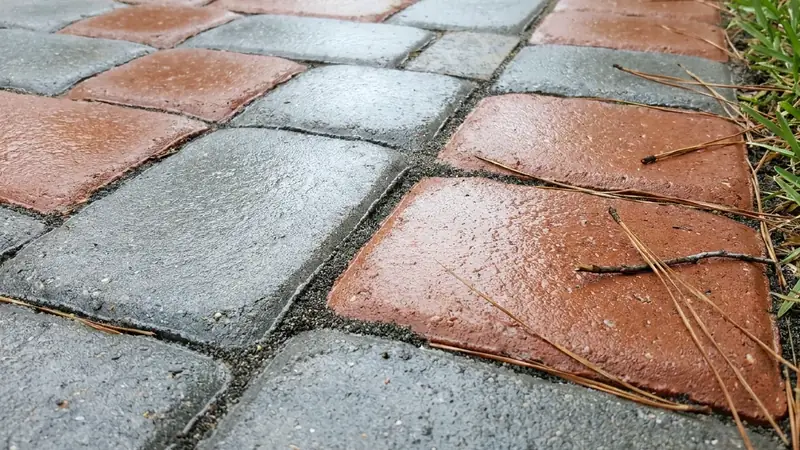
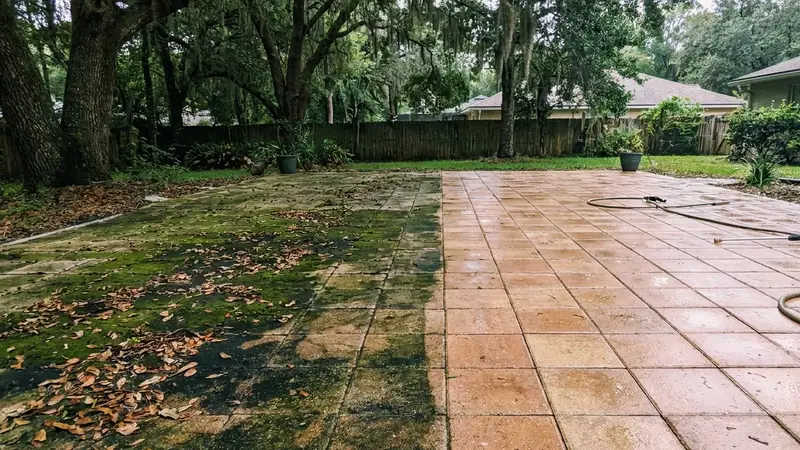
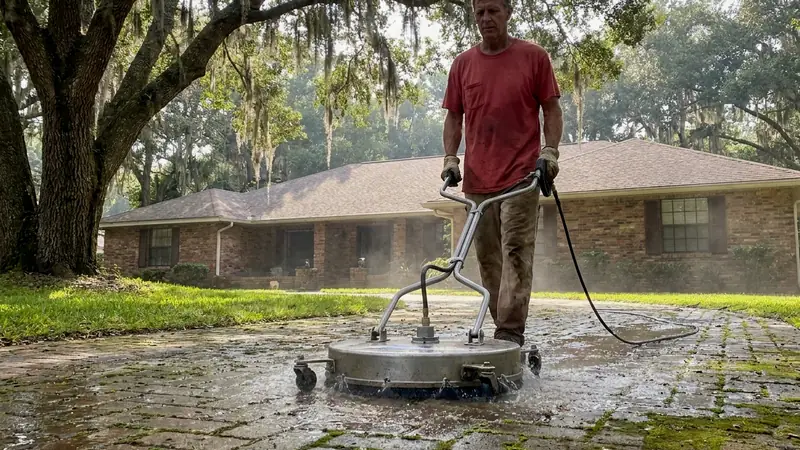
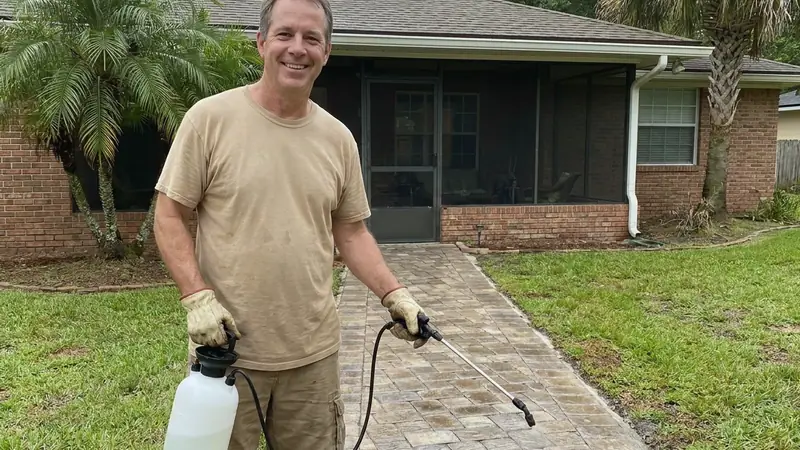
What do sealed pavers look like around Jacksonville Beach?
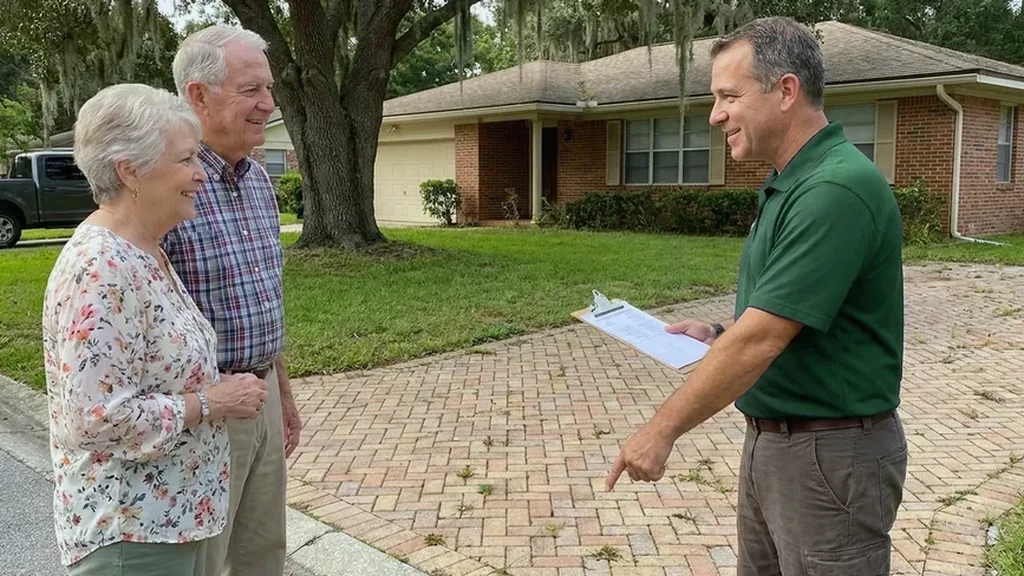
Why local matters in Jacksonville Beach
A contractor who works Jacksonville Beach knows the city is mostly water and sits three blocks from the ocean where US 90 ends at A1A. Salt and humidity are part of the job here. That shapes how long a coat lasts and how long pavers need to dry. To reach a contractor who works the Beaches, call (904) 621-4308.
Local experience also covers storm history. Matthew sent water over the dunes in 2016, and the pier was damaged and later rebuilt. A contractor who works here knows to ask whether water ever reached your driveway. Start with request your free estimate and mention any past flooding, with no obligation to hire anyone.
A local contractor can also tell you which streets are changing. The city's urban trail plan means some driveway aprons may be rebuilt, and the paver standards were updated in October 2023. Asking early saves a redo. Ask how a date would be set around that work when you request your free estimate.
Which Jacksonville Beach streets and landmarks can I use to describe my location?
Name your street and the main road nearest it. State Road A1A is the main commercial corridor, Beach Boulevard ends three blocks from the ocean, and Butler Boulevard runs east to 3rd Street South. Then add a landmark, such as Latham Plaza and Seawalk Pavilion at 11 1st Street North, so the contractor finds the right block. Give those details when you request your free estimate.
The Jacksonville Beach Pier reopened in July 2022 after a three-year rebuild and stands 12 feet taller. Casa Marina Hotel dates to 1925, and the Beaches Museum is at 381 Beach Boulevard. The lifeguard tower sits at 2 Ocean Front North. Whichever one is closest, mention it when you call (904) 621-4308.
Frequently Asked Questions
Why is paver sealing so expensive in Jacksonville Beach?
Prep is most of the job: a wash that clears salt film and sand, new joint sand, and a dry surface, all before the coat. Stripping an old coat adds more. One Jacksonville company counts two to three prep hours for each hour of sealing.
How much does it cost to re-sand and seal pavers in Jacksonville Beach?
Northeast Florida companies commonly publish $1.75 to $3.25 per square foot for the whole clean, sand and seal. A failed old coat has to be stripped first, which lifts the bid. Short driveways cost more per square foot, so compare total area as well as the rate. San Pablo Terrace homes have a median living area of about 1,646 square feet, so many driveways are mid-sized.
How long does paver sealing last in Jacksonville Beach?
Plan on two to five years between coats, nearer two on a driveway close to the coast. A Jacksonville company says to watch the water: when it stops beading and soaks in fast, a fresh coat is due.
What do professionals use to seal pavers in Jacksonville Beach?
Sealers come as solvent-based or water-based, and as film-forming or penetrating types. Pros typically spray first and then back-roll, so the sealer reaches into the joints. The old coat decides what comes next, because solvent-based sealer already on the surface rules out a water-based one. Matte or wet look is a separate choice.
Will salt air hurt sealed pavers in Jacksonville Beach?
It wears on them over time. A paver maker says salt can crystallize on surfaces as moisture evaporates, and routine rinsing helps in coastal regions. Pale pavers show salt residue sooner, so a near-coast driveway may need a new coat toward the shorter end of the range. The University of Florida says coastal sites deal with inescapable salt and sandy soils.
What happens to my paver apron if the city builds an urban trail?
The city says paver driveway aprons will be removed for the trail and the pavers replaced afterward. It also says paver driveway standards were updated in October 2023. Ask the city when work reaches your street before you seal the apron. Keep any notes from the city, since they show what was agreed.
Is a pool deck at the beach safe to seal?
Yes, with the right sealer. Gloss without an anti-slip additive is slippery when wet, a Jacksonville paver company warns, and it calls matte or penetrating sealer safest near pools. Any pool deck sealer needs the additive. Mention the pool when you request the estimate.
How soon after a storm can Jacksonville Beach pavers be sealed?
Wait for a clean, dry surface. A storm can leave salt, sand and silt on the pavers. It can also pull sand out of the joints, so the wash and a refill come first. PaverGuard says sealer should not go on before a forecasted downpour.
Ready for a Free Estimate in Jacksonville Beach?
Call (904) 621-4308 and tell us about your pavers.
Free, no obligation