
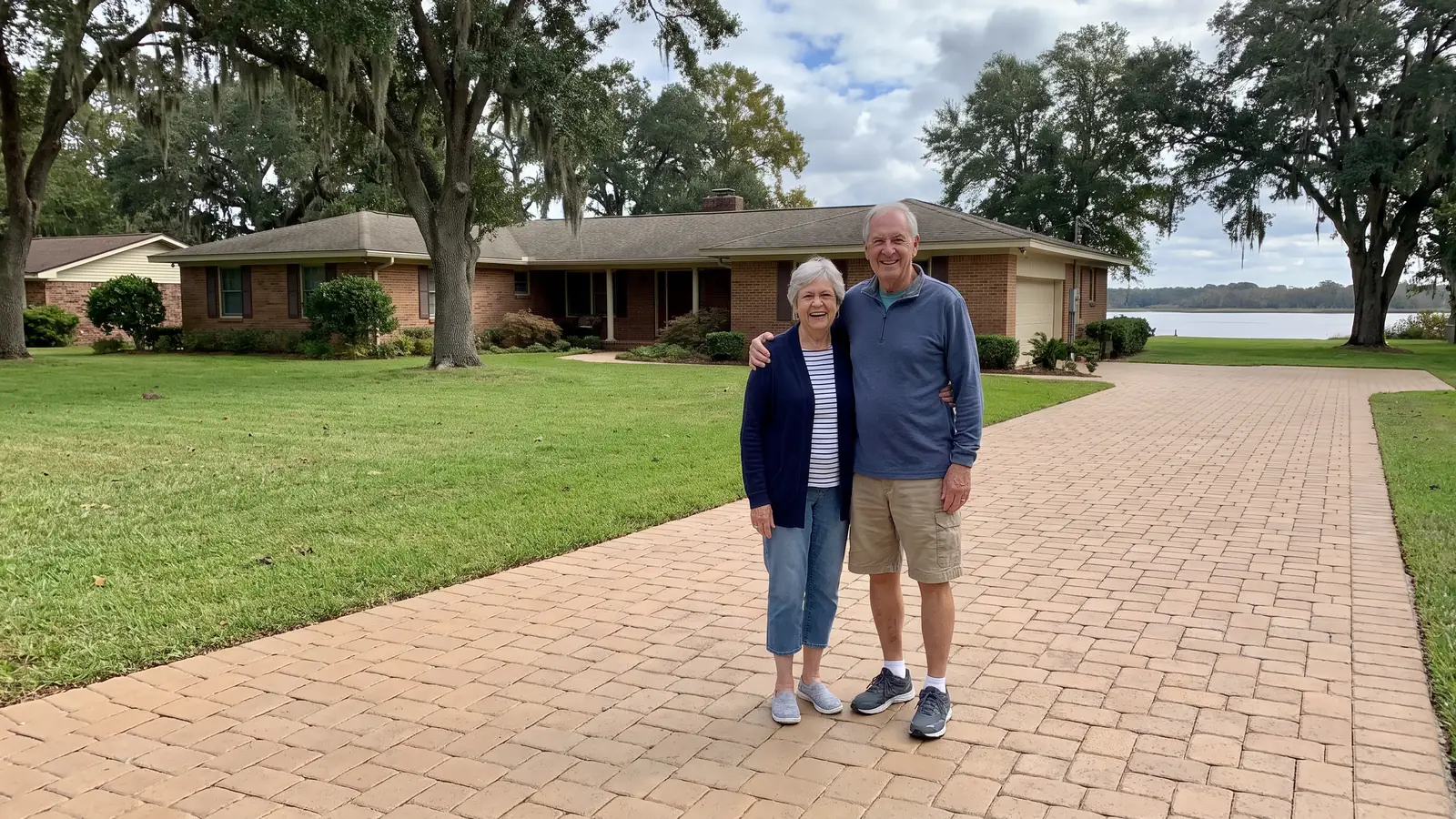
Paver sealing for Atlantic Beach homes
Paver Sealing in Atlantic Beach, FL
Salt air and blowing sand are hard on Atlantic Beach pavers, so call (904) 621-4308 for a free sealing estimate.
- Brings out deeper paver color
- Fresh joint sand helps lock pavers in place
- Gives weeds less room to grow
- Makes the surface easier to keep clean
- Free estimate, no obligation
Request a Free Estimate
Free, no obligation.
Fast, careful paver sealing in Atlantic Beach
Paver sealing in Atlantic Beach starts with a free estimate from a local contractor who washes, re-sands and seals driveways, pool decks and walkways. You can expect an answer inside 1 business day, often sooner. If you would rather talk, call (904) 621-4308.
Picture a driveway with a white salt film, sand packed into the joints and a patio that has faded away from the color of the house. After a deep wash, fresh sand and a new coat, the color comes back even from edge to edge. One beaches company says many homes off Plaza, Ocean Boulevard and Seminole Road have pavers 15 to 20 years old, so ask what coat yours already has, and you can request your free estimate.
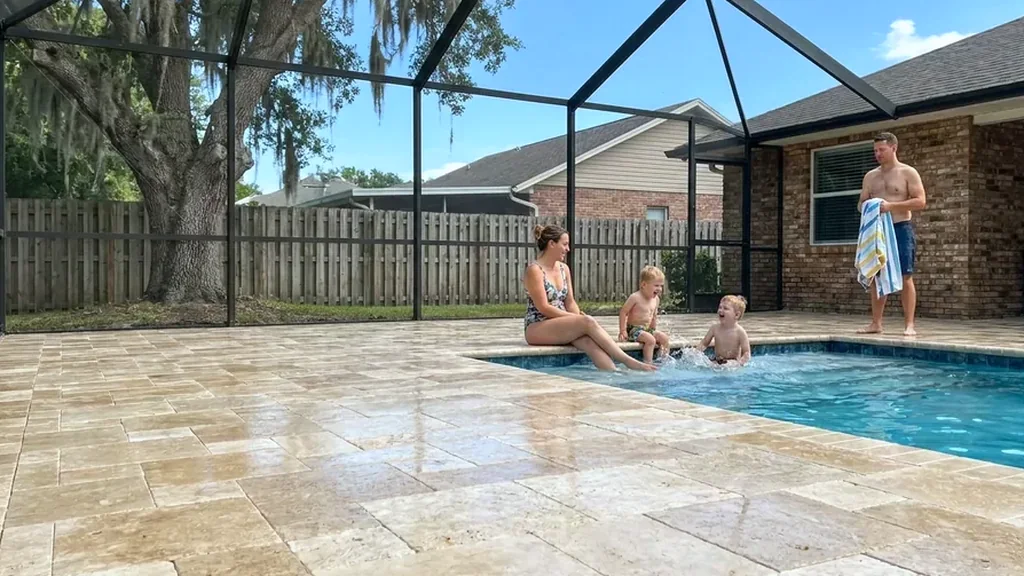
Why hire a local paver sealing contractor in Atlantic Beach?
Atlantic Beach sits at sea level between the ocean and the Intracoastal Waterway, so salt, sand and storm water all reach driveways. A local contractor can plan for that on your street when you request your free estimate.
A free estimate
A local contractor looks at your Atlantic Beach pavers at no charge and quotes a price before any work is agreed.
A range to check against
Regional companies publish $1.75 to $3.25 per square foot to clean, sand and seal. Hold your bid up against that figure.
Matte or wet look
Natural matte is popular locally, one beaches company says, and a wet look deepens color. You choose what suits your house.
You decide
The date and the finish are yours, and so is the choice to wait. An Atlantic Beach estimate carries no obligation.
Get Your Free Estimate in Atlantic Beach
Tell us about your pavers in Atlantic Beach.
Free, no obligation
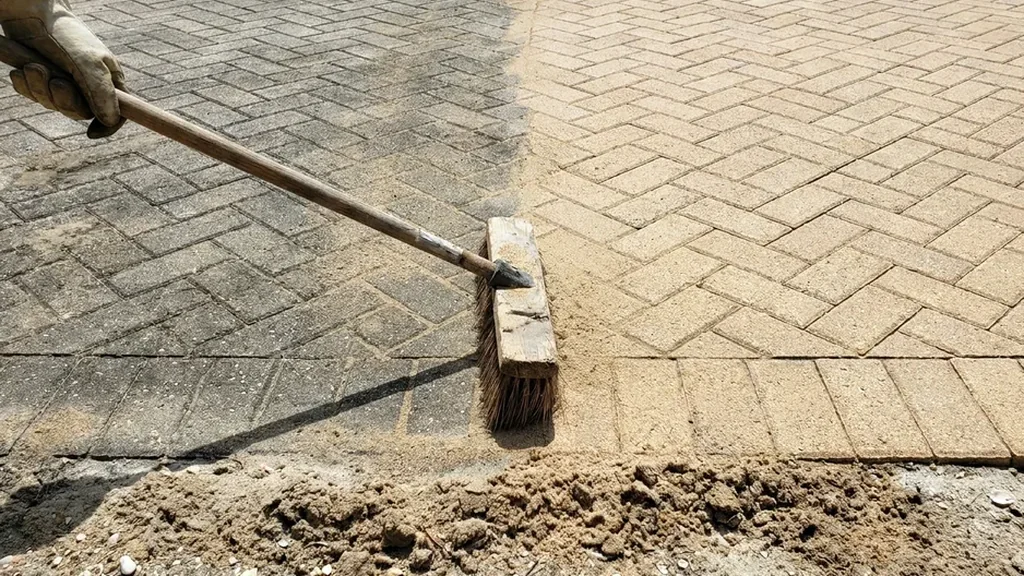
What paver problems show up most in Atlantic Beach?
Salt film and blowing sand
A beaches paver company says salt spray leaves a white film on unsealed pavers and speeds fading. It also says fine beach sand blows in while the original joint sand washes out. A paver maker adds that salt particles can crystallize on a surface as moisture evaporates. A deep wash clears the film, and a coat helps hold the sand in place. The paver maker suggests an occasional rinse, which keeps buildup from settling in between coats. Sealing also keeps joint sand in place and slows weeds and ants, the same company adds.
Soft ground and low spots
That same company says Atlantic Beach sits on loose, sandy soil that shifts when water runs under pavers. Low spots tend to form near downspouts, A/C pads and the street apron. Sealing over a dip only preserves it, a Jacksonville company warns, so lifted or sunken sections are reset first. Edges that pull away from the yard are a sign to call. The fix costs less when it is caught early, before more sand and water move under the surface.
Standing water in low neighborhoods
The city says the Aquatic Gardens area has had significant, repeated flooding, and Atlantic Beach sits at about sea level. Pavers that have sat in standing water can be left with silt in the joints. That silt has to be washed out before any sealer goes on, or the coat will trap it. Mention past flooding on your lot at the first visit. The city's project doubled a culvert and reshaped ditches, but it does not change flood maps, so low lots stay low. Wikipedia lists the city's elevation at 0 feet, so water has few places to go.
Shade under mature trees
Atlantic Beach protects its older trees, and in 2026 the city tightened its rules for live oaks, magnolias, pines, cedars and cypress. Those trees throw shade, and a Jacksonville cleaning company says shaded or damp areas may need washing more often. Green growth tends to start under the lowest branches. A walkway there may need a wash before it needs a coat. Before any big change to the shade, note that tree removal requests go to the city's Community Development Board first.
A short life for coats near the ocean
A Jacksonville paver company says driveways near salt air at Atlantic Beach need resealing closer to every 18 to 24 months. It lists sunscreen and furniture scuffs as wear on pool decks and suggests rinsing salt-system decks after parties. A matte, anti-slip finish suits a deck. Check your own pavers before you assume the full span of years applies. A quick splash test on a sunny driveway tells you whether the coat is still doing its job.
Does the part of Atlantic Beach you live in change how pavers are sealed?
Yes, because the city runs from the ocean side to the Intracoastal Waterway, and conditions change across that width. Salt spray matters most on the beach side, while standing water shows up in low areas such as Aquatic Gardens. The beach side also takes blowing sand. Name your street when you request your free estimate.
Off Plaza, Ocean Boulevard and Seminole Road, a beaches company says, many homes have pavers that are 15 to 20 years old. Pavers that age may have had a coat or two, or none, so the first step is to find out what is on yours. A walk around the yard shows where the coat has worn thin. Share what you know when you call (904) 621-4308.
Seminole Beach was annexed in 1987, and in 1996 the city's west boundary moved out to the Intracoastal. That means one city now covers blocks that grew up in different decades. The area west of the beach roads sits closer to the waterway. A short description of your street helps the contractor plan, so request your free estimate.
What does paver sealing cost in Atlantic Beach?
Across Northeast Florida the published price is $1.75 to $3.25 per square foot to clean, sand and seal. In Atlantic Beach, salt film, lost joint sand and an old coat that has failed move a job within that range. One Jacksonville service page prices stripping and resealing higher once the old coat has failed. To see what your own surfaces would cost, request your free estimate, and there is no fee for the look.
The city counts patios, porches, driveways and sidewalks together when it measures impervious area, so it helps to know what you have. Measuring every surface also sets your price. If you plan to widen or add a driveway, the city says to contact its Building Department first. Call (904) 621-4308 to book the measure.
| Paved area | Typical example | Clean, sand and seal |
|---|---|---|
| 300 sq ft | Small patio or walkway | $525 to $975 |
| 600 sq ft | Two car driveway | $1,050 to $1,950 |
| 1,000 sq ft | Large driveway or pool deck | $1,750 to $3,250 |
| 1,500 sq ft | Driveway plus pool deck | $2,625 to $4,875 |
Math based on the $1.75 to $3.25 per square foot that Northeast Florida paver companies published as of November 2026. Your contractor sets the actual price after seeing the surface. Repairs, leveling and stripping failed sealer are usually extra.
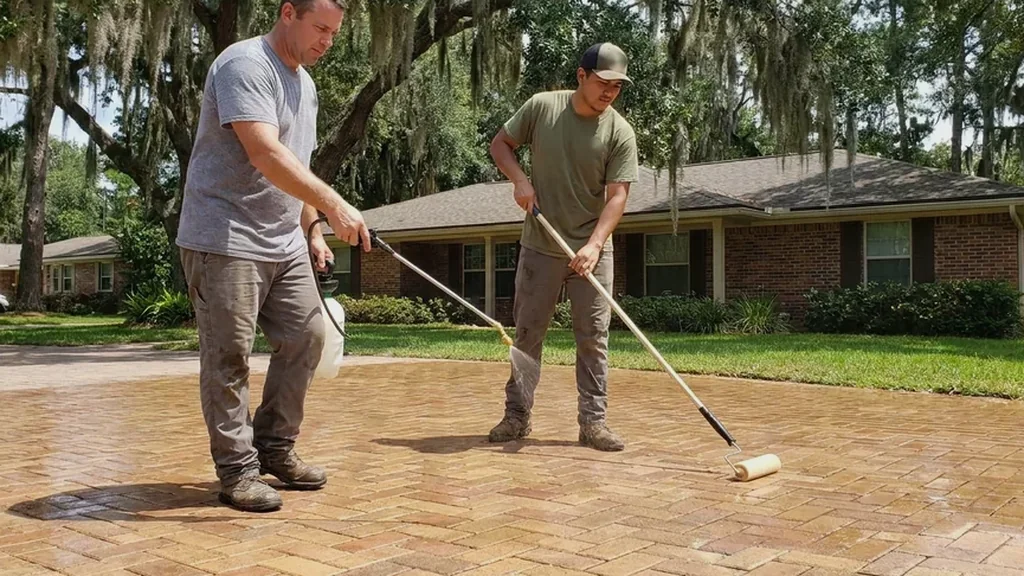
How does a paver sealing job work in Atlantic Beach?
Walk the lot, the low spots and the old coat
The contractor looks at how water leaves your pavers and notes any low spots near downspouts or the street apron. Sunken sections are marked for repair, since a coat over a dip preserves it. If a coat is already on, its type matters because water-based sealer cannot go over solvent-based. Mention any past flooding on your lot. Photos of each surface before the visit help the contractor plan the day.
Wash off the salt film
Deep cleaning comes next, because salt spray leaves a white film that sealer should not cover. Green growth under trees and any silt from standing water are treated at the same time. Rinse water is kept off plants and any stone trim. The surface should look clean and even before more work is done. Pool decks need a close look, since splash-out leaves salt or chlorine residue behind.
Refill the joints with fresh sand
Wind and rain wash out the joint sand here, and washing empties more of it. New sand goes into the joints before anything is sealed. Full joints hold the pavers steady and leave less room for weeds. The surface is swept clean afterward. Joint sand is checked from time to time, a paver maker notes, so ask when yours was last topped up. Fine beach sand blows in as the old sand washes out, so a top-up is common here.
Choose a dry window
Sealer needs a dry surface, and Jacksonville's rain comes mostly from May to September in brief, intense storms. A careful contractor checks the forecast instead of sealing damp pavers, the usual cause of a white coat. Sunny driveways dry faster than shaded walks. If rain is close, the date moves. Shade matters here too, so the contractor looks at when each section last saw direct sun.
Seal, back-roll and keep cars off
The sealer is usually sprayed and then back-rolled into the joints. Natural matte is popular locally, while a wet look is an option for driveways. One Jacksonville company says walking is usually fine within hours and cars need about a day. Ask what applies to your drive. Pool decks and travertine are usually done in a matte, non-slip finish. Keep sprinklers off the new coat until the contractor says it has cured.
Complete paver services in Atlantic Beach
An Atlantic Beach job runs in a set order: wash, re-sand, dry, then seal. The wash lifts salt film and green growth, and fresh sand fills the joints it emptied. Sealer goes on last, so nothing dirty is locked underneath. To ask how long each stage takes on your lot, call (904) 621-4308.
Driveways, pool decks, courtyards and walkways wear differently near the ocean. A driveway takes sun and tires, a pool deck takes splash, sunscreen and furniture, and a shaded walk takes damp. The contractor may suggest a different finish for each. List your surfaces when you request your free estimate.
Finish choice starts with use. Pool decks and travertine are matte by default, one beaches company says, and wet look is an option for driveways. A wet look darkens color but shows wear in drive lanes. Call (904) 621-4308 to talk through the finish for your home.
Timing follows the weather. Jacksonville's rain falls mostly from May to September, so a dry spell outside those months is easier to plan around. Sealer needs a dry surface, and rain close behind the job can spoil it. To find a date that fits your street, request your free estimate.
Questions to ask before you hire
- Does a curved border or a lot of cut pavers change the price per square foot?
- How much notice do you need if I have to change my date?
- What do you use to put the sealer down, a sprayer or a roller?
- How do you deal with tree roots that have pushed a few pavers up?
- How do you wash the pavers without blasting the sand out of the joints?
- How do you keep leaves and pine needles from landing in the wet sealer?
- If you find more damage once you start, how do you handle the extra cost?
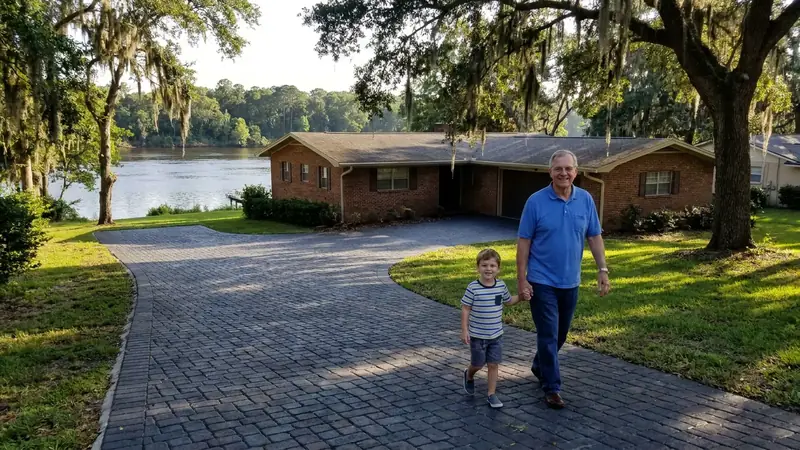
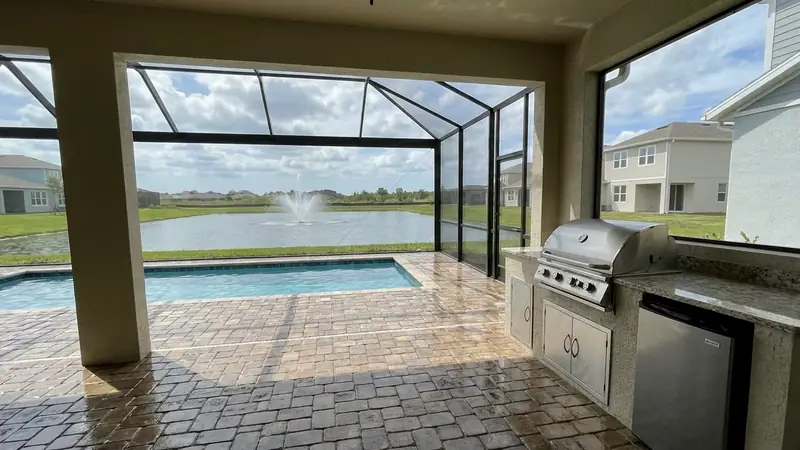
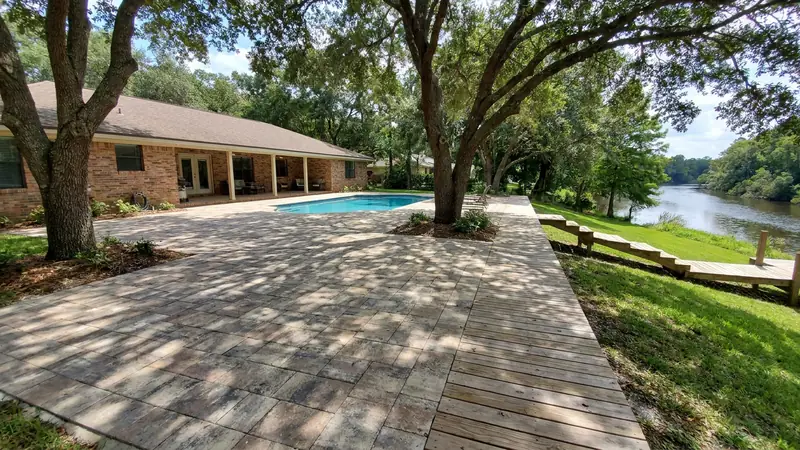
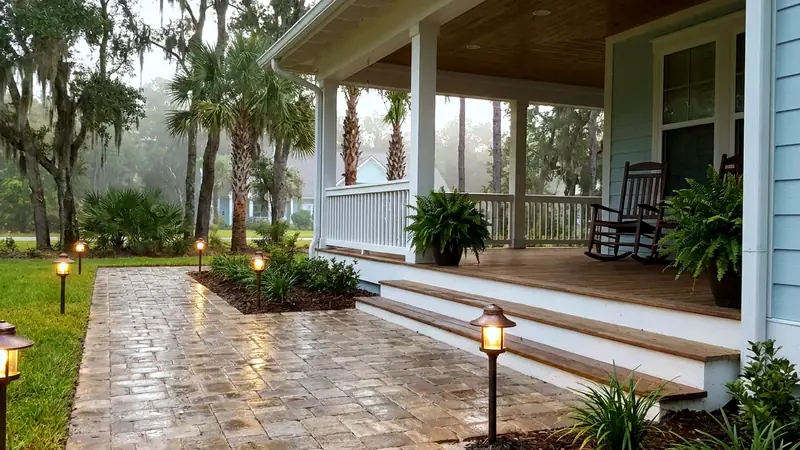
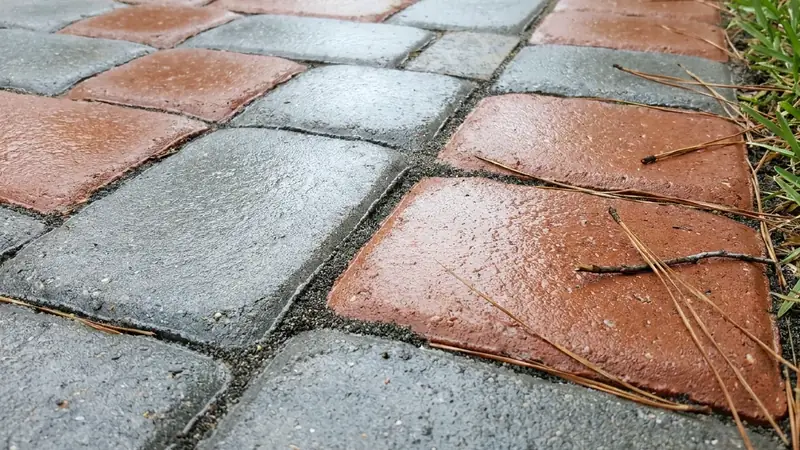
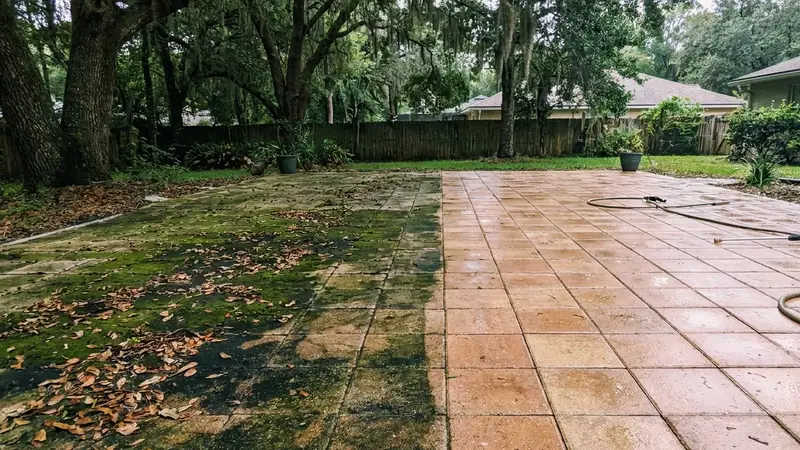
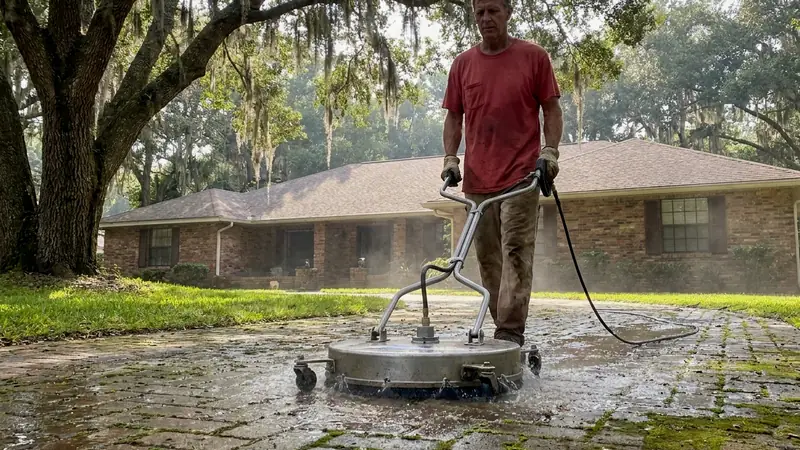
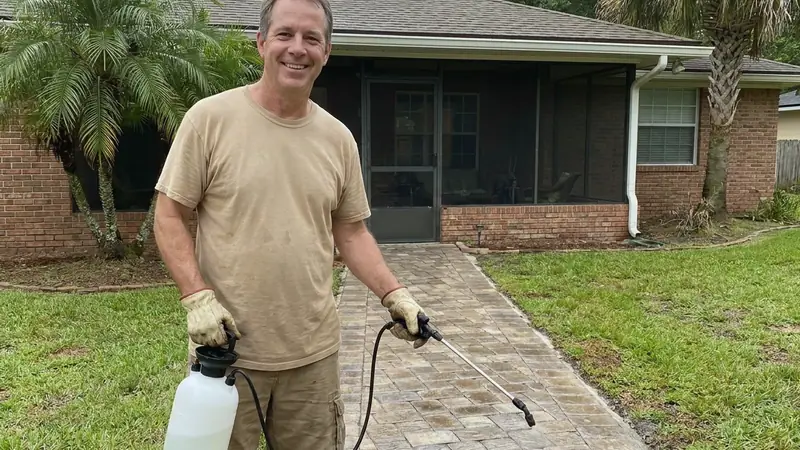
What do sealed pavers look like around Atlantic Beach?
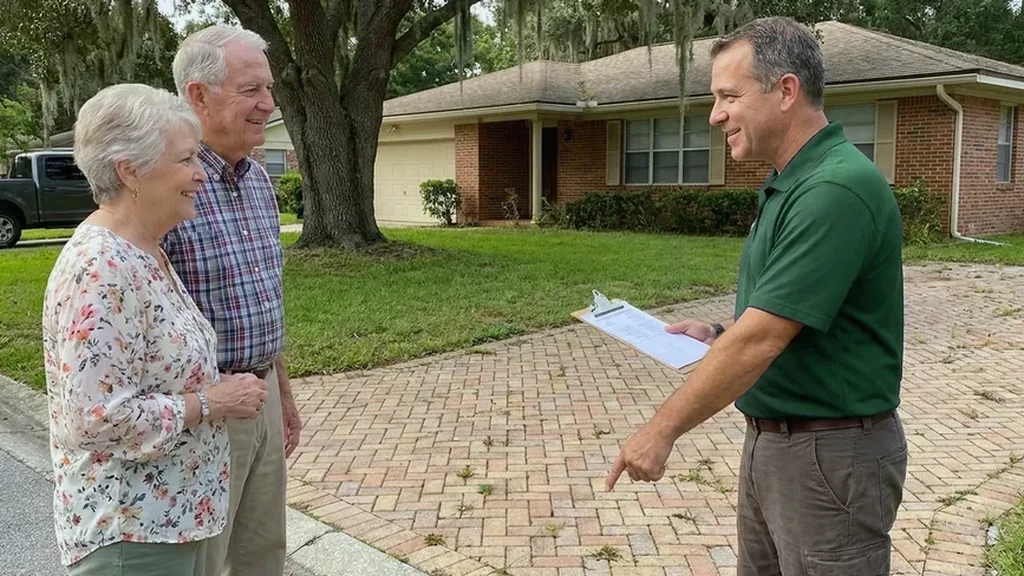
Why local matters in Atlantic Beach
A contractor who works the beaches looks for salt film and blown-in sand before anything else. Those two things decide how deep the wash goes and how much sand is needed. Someone from farther inland may price the job before seeing either. To reach a contractor who knows this stretch of Duval County, call (904) 621-4308.
Local work also means knowing where water collects. The city has spent years on drainage in Aquatic Gardens, and low spots near downspouts and the street apron are common on pavers here. A contractor who has seen that checks grade before sealing. You can request your free estimate and ask how a low corner would be handled.
Water rules matter at the beach too. Watering limits apply to city water and private wells alike, with two allowed days a week in spring and summer, so sprinkler days are fixed. A local contractor plans the job around those days and keeps spray off fresh sealer. If that sounds useful, request your free estimate and mention your schedule.
Does Atlantic Beach's history matter when you hire someone to seal pavers?
Yes, because the streets were laid out for summer homes and then for families who stayed. Atlantic Boulevard was completed in 1910, and in 1913 the Atlantic Beach Corporation funded streets, light, water and sewer lines. The Continental Hotel opened in 1901 and burned in 1919. If you live on one of the older blocks, request your free estimate.
The town was incorporated on December 4, 1925, and Naval Station Mayport grew up nearby in the 1940s. Today the city keeps Dutton Island Preserve, 31.86 acres that were once Pine Island, and City Hall sits at 800 Seminole Road. Close to any of these Atlantic Beach sites, call (904) 621-4308 and give the contractor your street.
Frequently Asked Questions
What is the average cost to seal pavers in Atlantic Beach?
Published rates in Northeast Florida are $1.75 to $3.25 per square foot to clean, sand and seal. A typical Atlantic Beach job lands inside that range, and shade growth, lost joint sand or a failed old coat push it up. Ask for total square footage so you can check the math. The final number depends on what the contractor finds at the visit.
Why is paver sealing so expensive in Atlantic Beach?
Most of the cost is labor, since a full job washes, re-sands and seals every square foot. Salt film and blown-in sand add washing and sand. A failed old coat has to be stripped first, which a Jacksonville service page prices higher. Washing is the step that changes most from one beach lot to the next.
How long does paver sealing last in Atlantic Beach?
Quotes commonly span two to five years between coats. A Jacksonville company says driveways near salt air at Atlantic Beach need resealing closer to every 18 to 24 months. Check with a splash of water, since water that beads means the sealer is still working. A written quote should name the sealer and the number of coats.
What are the downsides of sealing pavers in Atlantic Beach?
The main downsides are upkeep and timing. A coat wears and needs redoing, and a wet look shows wear in drive lanes sooner than matte. Sealer also needs a dry surface, so a rainy stretch can push the date. A wet look shows wear in drive lanes sooner, so think about how the surface is used.
What paver sealer works for Atlantic Beach salt air?
Salt does not harm the pavers themselves, a beaches company says, because the base and joints are what fail. A coat helps hold joint sand and slows fading. Natural matte is popular locally, and water-based sealer cannot go over a solvent-based coat. Ask the contractor which product it is, so the next coat matches. Sealing also keeps joint sand in place and slows weeds and ants, that company adds.
Can pavers be sealed after flooding in Atlantic Beach?
Yes, as soon as they are washed and fully dry. Silt from standing water would be trapped under a coat, so it is washed out and the joints are refilled. Mention past flooding on your lot, such as in Aquatic Gardens, at the first visit. Ask what the contractor sees on your street that may change the plan. Low areas such as Aquatic Gardens, which the city says has had repeated flooding, are where this matters most.
Do I need a permit to seal pavers in Atlantic Beach?
The city's FAQ mentions permits for driveways and for work in the right-of-way, and it does not mention sealing by name. If you are widening or adding paving, contact the Building Department first. For plain sealing, ask city staff if you are unsure.
Will sealing fix sunken pavers on my Atlantic Beach driveway?
No. A Jacksonville company says sealing over a dip only preserves it, so sunken sections are reset first. Loose sandy soil here can shift when water runs under pavers, so show the contractor each low spot at the first visit. The repair is done on a rebuilt base, then the surface is reset level before any coat.
Ready for a Free Estimate in Atlantic Beach?
Call (904) 621-4308 and tell us about your pavers.
Free, no obligation