
Paver sealing for Southside homes
Paver Sealing in Southside, FL
The Southside was sand dunes and pine trees in 1960, so call (904) 621-4308 for a free paver sealing estimate.
- Brings out deeper paver color
- Fresh joint sand helps lock pavers in place
- Gives weeds less room to grow
- Makes the surface easier to keep clean
- Free estimate, no obligation
Request a Free Estimate
Free, no obligation.
Fast, careful paver sealing in Southside
Paver sealing is available across the Southside, from the 1950s streets of Spring Park to the gated blocks of Deercreek and Deerwood. A local contractor cleans, re-sands and seals driveways, patios and walkways, with a free estimate at the start. Send a request or call (904) 621-4308, and a reply lands within 1 business day, usually much sooner.
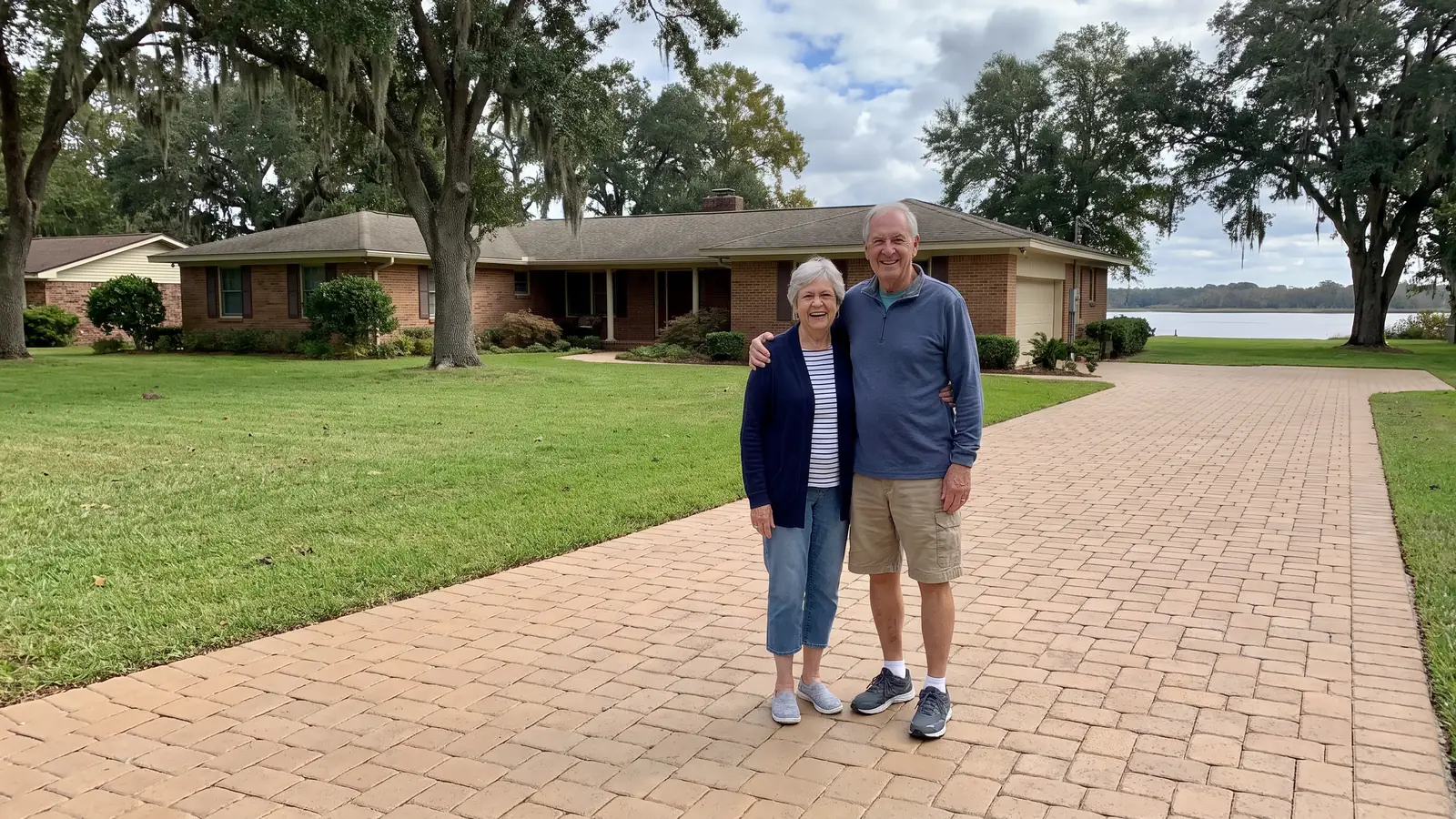
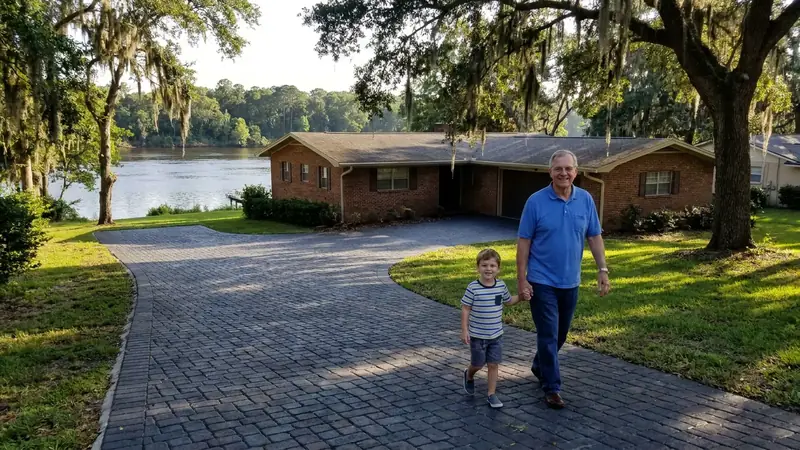
Here is the Southside driveway many owners know. The color has gone chalky from years of sun, oil spots mark the spot where the car sits, and the joints between pavers are low and gray. A wash, a refill of sand and a fresh coat make it look like a different driveway, and the same goes for the walk to the front door and the patio out back. To ask what yours needs, request your free estimate and describe what you see.
Why hire a local paver sealing contractor in Southside?
Southside owners hire a local paver contractor because the area mixes old subdivisions, condos and gated communities, and each one has its own rules and its own wear. To hear how that applies to your address, call (904) 621-4308.
No-fee first visit
A contractor inspects your Southside pavers and quotes a price for free. Nothing is settled until you decide.
A figure to compare
Around Jacksonville, companies commonly list $1.75 to $3.25 per square foot, cleaning through coat. Hold every Southside quote beside it.
Association-aware
Plenty of Southside communities have an HOA or condo board, so a local contractor asks about gates and shared patios first.
Your date, your finish
You pick the finish and the day, or you walk away. A Southside estimate carries no obligation.
Get Your Free Estimate in Southside
Tell us about your pavers in Southside.
Free, no obligation
What paver problems show up most in Southside?
Sand under the pavers that stays wet
In 1960 the land south of Beach Boulevard and east of U.S. 1 was wilderness of sand dunes and pine trees, according to Wikipedia's Deerwood history. The USDA's Pottsburg soil series, first described in Duval County, is somewhat poorly drained, with a seasonal high water table 0 to 24 inches deep for part of most years. One Southside paver company says damp bedding sand under pavers is common after rain. Wet bedding is one reason pavers settle, which means a Southside driveway can need a reset before it needs a coat. Ask the contractor to probe any spot that feels soft underfoot.
Settling, dips and washouts
One Jacksonville sealing company says sinking and washouts are the main reason pavers fail. A paver maker adds that a weak or poorly compacted base is a leading cause of pavers sinking, shifting or cracking. Whatever is on the surface gets locked in by sealing, dips included. Low or lifted areas get reset before any coat goes on, so point out every dip you have noticed. Edges near the garage door and the street are common places for them.
Sun-faded color on open driveways
One Jacksonville company says unsealed concrete pavers fade noticeably within 3 to 5 years in the local sun. Another company lists washed-out color among the signs of a worn coat, especially in sunny areas like Mandarin and Southside. Water that no longer beads is another sign. A fresh coat brings the color back and keeps oil and dirt sitting on top, which makes the next spill easier to deal with. Pick a finish with the house in mind, since a color-enhancing coat looks richer than a natural one.
Joint sand that is gone and weeds that are not
Many local installs used play sand, which afternoon storms and sprinklers wash out, a St. Augustine area paver company says. Landscape Ontario says weeds tend to appear where joints have widened and soil has collected. Rainfall in Jacksonville averages about 52 inches a year, most of it from May to September. Refilling the joints is part of every job. Ask which sand the contractor uses and whether color options exist.
Rust spots from iron-rich irrigation
One Southside paver page names iron-rich irrigation water as a cause of orange marks on pavers. Most Florida well water is high in iron, UF extension says, and it can leave rust deposits. Rust gets pre-treated before sealing, because sealer would lock it in. Some deep stains may not come out completely, and a contractor should say so before starting. Ask to see the spot again once it is clean.
Who can book paver sealing at a Southside condo, rental or gated home?
The person or group in charge of the pavers, which is not always the person living there. In ZIP 32216, 52.06 percent of occupied homes are renter-occupied, and 48.50 percent of housing is multi-family. A tenant who sees tired pavers should pass the quote to the owner, because the owner is the one who can say yes. Owners can call (904) 621-4308 and ask for a free estimate, with no obligation to go ahead.
Condo and townhome patios are a different case. One Southside paver page says shared patios are usually managed by the association, condo patios are often small, and minimum job sizes can apply. Deercreek, a gated country club community of 750 homes east of Philips Highway, and Deerwood, which has been called the first gated community in Florida, both have gates to plan around. Gated communities may limit contractor hours and vehicle access, so request your free estimate and mention your gate rules.
Rules on color are worth a quick check. Associations can enforce an existing scheme for outside appearance under Statute 720.3035. A natural-look sealer may be treated as maintenance, while a color-enhancing or high-gloss finish is more likely to need approval, according to one Southside paver page. Ask your board for the rule in writing, then call (904) 621-4308 and share what they said.
What does paver sealing cost in Southside?
Jacksonville companies post prices of $1.75 to $3.25 per square foot, from wash to final coat. A Southside job lands toward the low end when the pavers are clean and the joints are mostly full, and higher when old sealer has to come off or stains need extra work. Pool decks, long driveways and several small patios are each measured and added together. To see where yours lands, request your free estimate and ask for a free number.
Small jobs cost more per square foot, since one Jacksonville guide says prep is most of the cost and prep does not shrink with the surface. A small condo patio can also run into a company's minimum job size. A larger layout can earn a better rate per foot. Call (904) 621-4308, describe your space, and the contractor will say which situation you are in.
| Paved area | Typical example | Clean, sand and seal |
|---|---|---|
| 300 sq ft | Small patio or walkway | $525 to $975 |
| 600 sq ft | Two car driveway | $1,050 to $1,950 |
| 1,000 sq ft | Large driveway or pool deck | $1,750 to $3,250 |
| 1,500 sq ft | Driveway plus pool deck | $2,625 to $4,875 |
Math based on the $1.75 to $3.25 per square foot that Northeast Florida paver companies published as of November 2026. Your contractor sets the actual price after seeing the surface. Repairs, leveling and stripping failed sealer are usually extra.
How does a paver sealing job work in Southside?
Check access, gates and who is in charge
The contractor first asks about guard gates, visitor lists and whether the pavers belong to you or the association. Gated Southside communities can limit contractor hours and vehicle access. Then comes a walk around the pavers to find dips, lifted edges and low spots. Anything sunken gets marked for repair before sealing.
Wash the faded surface clean
Cleaning removes sun-baked grime, oil spots and rust marks. Oil and rust get pre-treated first, and some deep stains may not come out completely. Shaded corners get extra time for algae. The pavers need to be clean, because sealer locks in whatever is there.
Refill the joints with sand
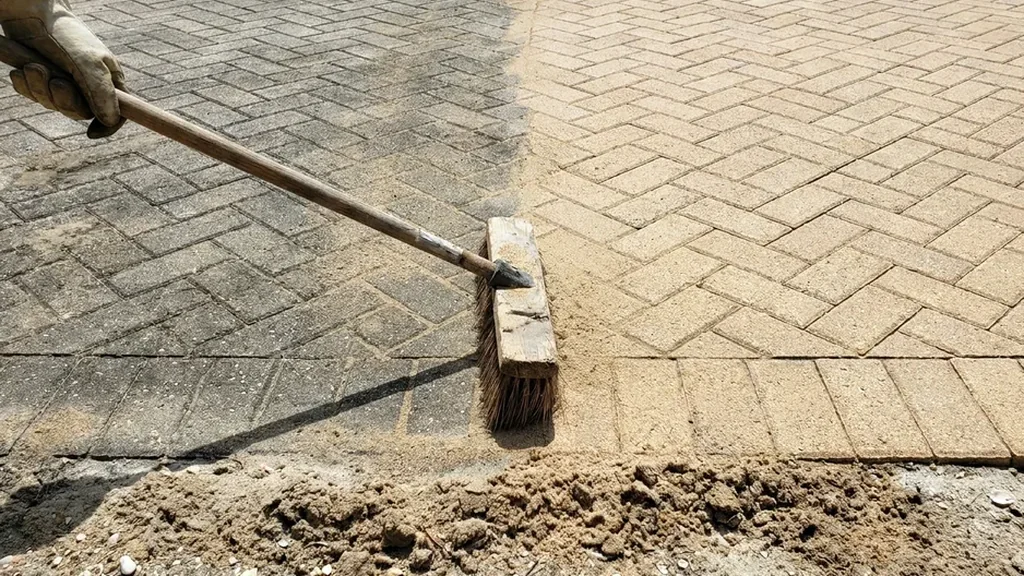
Since washing takes out joint sand, new sand goes in before any sealer. On the Southside's sandy ground, open joints let soil settle in and weeds follow. Full joints keep pavers from shifting. The surface is swept clean before the coat, so loose grains do not end up trapped under the sealer.
Give the pavers time to dry
Sealer needs a dry surface. One Southside paver page says bedding sand under pavers can stay damp after rain, so a contractor may wait extra days after a wet week. Sealing over damp pavers is how white haze starts, and a hazy driveway is hard to live with.
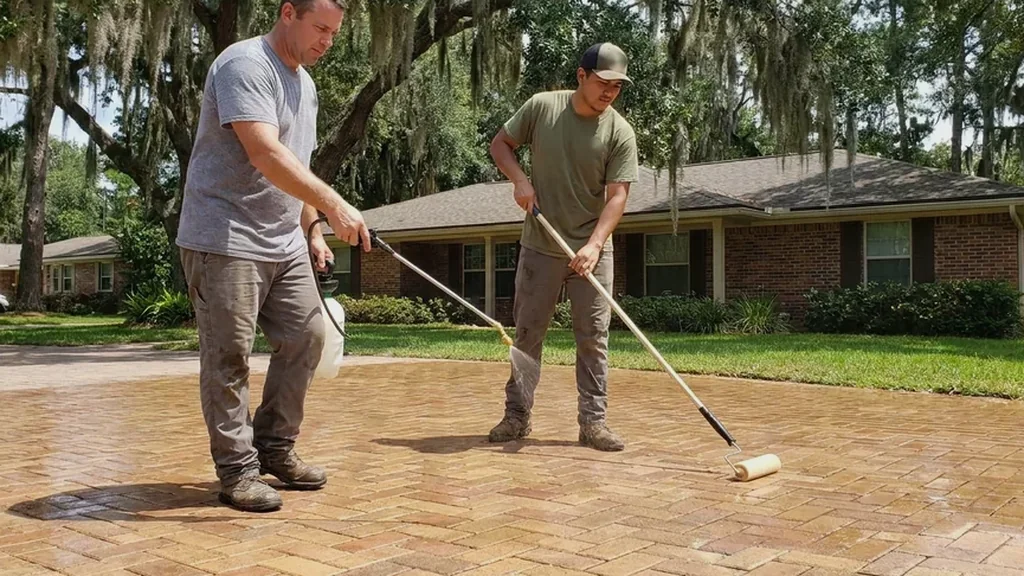
Spray, back-roll and let it cure
Professionals typically spray and then back-roll, which gives even coverage and works sealer into the joints. A wet look shows scuffs sooner than matte, so pick with your driveway in mind. Plan on two to five years before the next coat, which is what companies commonly quote. Ask how long to stay off, since one company says about a day for cars. Many homeowners park on the street or in the garage overnight afterward.
Complete paver services in Southside
Southside work always runs in the same order: wash, refill the joints, let it dry, then seal. The wash lifts oil, sun-baked grime and rust, new sand goes in next, and the coat is last. Call (904) 621-4308 to hear how long those steps would take at your address.
Surfaces differ around the Southside. Driveways take tires, oil and sun, and one company ranks them as the hardest-worked paver surface. Condo patios tend to be small, and front walks sit shaded under trees and eaves. When you request your free estimate, list each surface.
Sealer comes in water-based and solvent-based, then matte or wet look. A water-based coat will not go over a solvent-based one, so the contractor finds out what is on your pavers, and some oil-based coats must be stripped first. Wet look scuffs sooner. Call (904) 621-4308 to talk it through.
Timing depends on rain and on how quickly the ground dries. Most rain comes May through September in short, hard storms, and November to April is drier. A contractor may push a date back after a soaking. For a date that fits your week, request your free estimate.
Questions to ask before you hire
- Will you walk the pavers with me first and point out any cracked or stained ones?
- What do you use to put the sealer down, a sprayer or a roller?
- How do you deal with tree roots that have pushed a few pavers up?
- Is your sealer safe to use around a saltwater pool?
- How do you wash the pavers without blasting the sand out of the joints?
- Will you haul off the old sand and the dirt you wash out?
- How much notice do you need if I have to change my date?
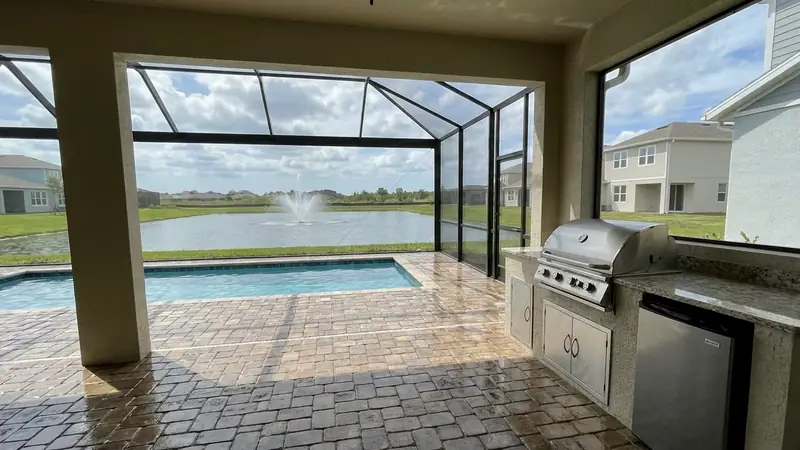
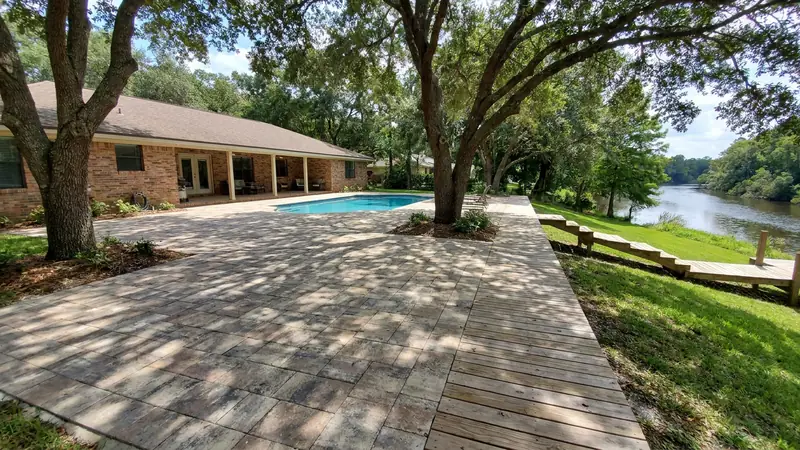
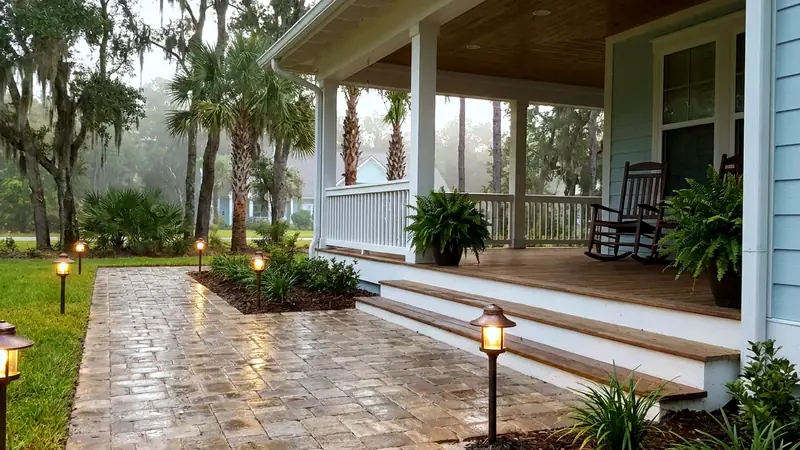
What do sealed pavers look like around Southside?
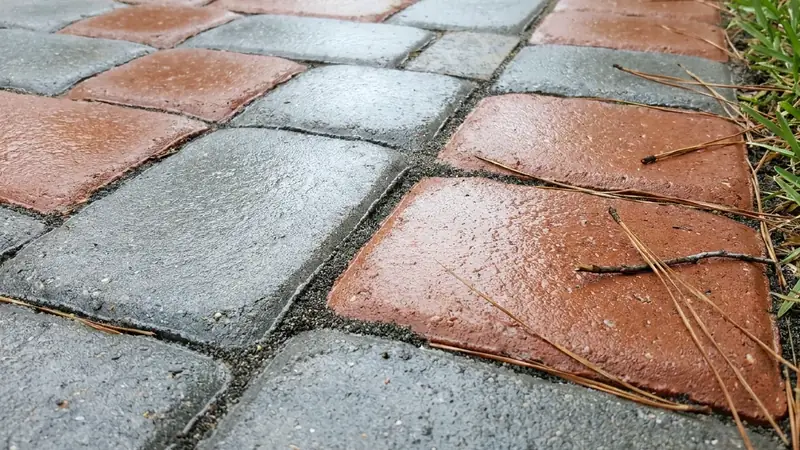
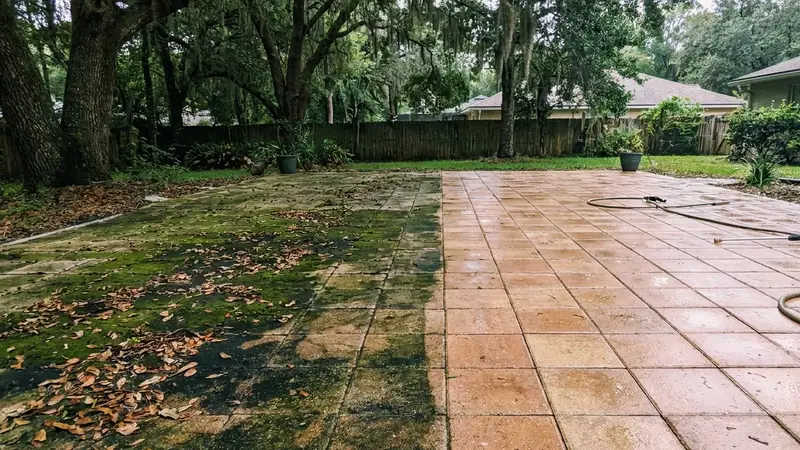
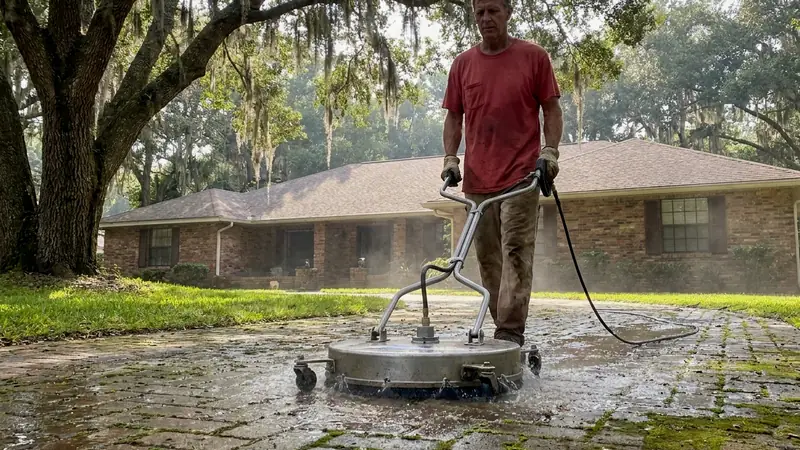
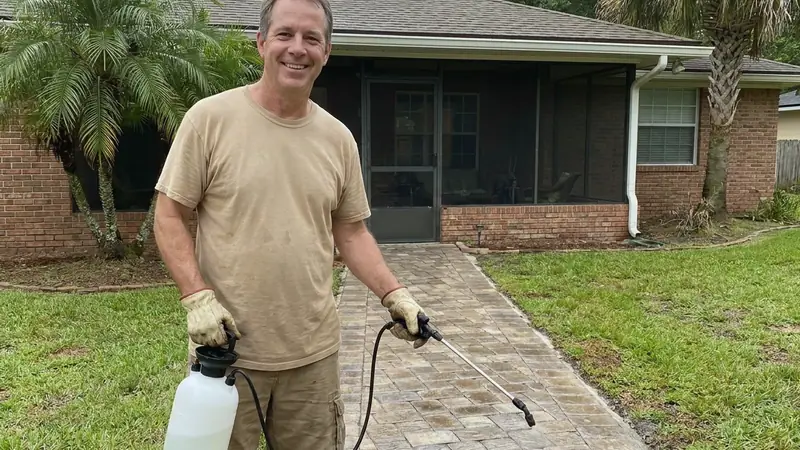
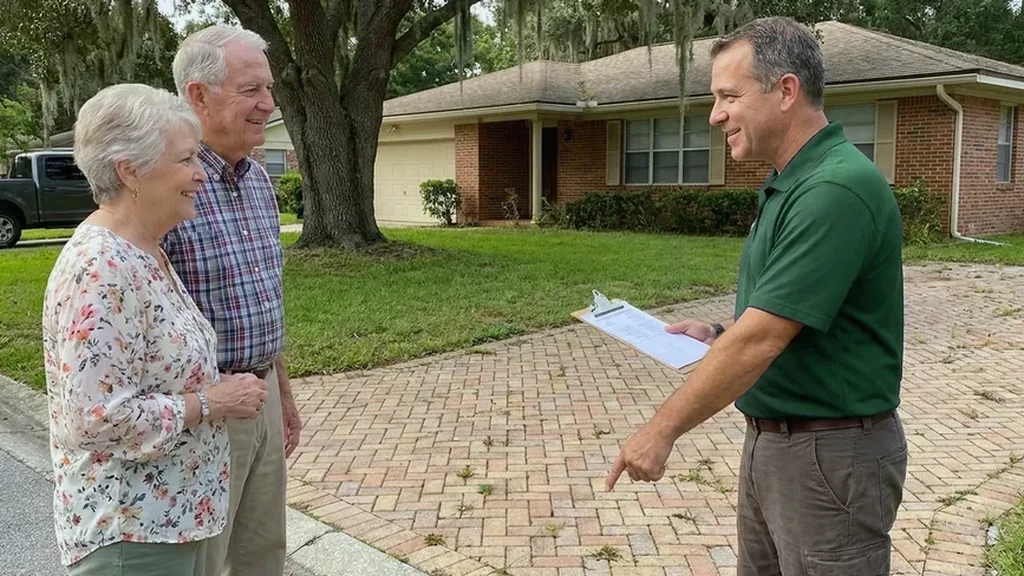
Why local matters in Southside
A contractor who works the Southside knows the ground. Much of this area was sand and pine trees a few decades ago, and bedding sand can stay damp after rain. That shapes when sealer can go down and how long a repair might take, and it explains why pavers that look fine in dry months can settle after a wet summer. To reach a contractor who works here, call (904) 621-4308.
The same contractor knows the buildings. Lakewood, which Walter Crabtree began developing in 1946, has Mid-century Modern homes, Spring Park Manor dates from the 1950s, and the condos near Town Center are newer. Each puts pavers against a different structure and a different set of rules. If you are not sure what applies, request your free estimate and share your address, the age of the home and any association name.
Gates, schedules and shared spaces come up here a great deal, and the answers change from one community to the next. A contractor who works Southside communities knows to ask for visitor lists and gate hours before showing up. That saves everyone a wasted trip and a rescheduled day. Call (904) 621-4308, mention your community, and plan the visit with no obligation.
Was the Southside sand dunes and pine trees not long ago?
Yes, for much of it: in 1960 the area south of Beach Boulevard and east of U.S. 1, about 50 square miles out to the Intracoastal Waterway, was sand dunes and pine trees, and the Skinner family once owned close to 40,000 acres there. Deerwood followed with a golf course built in 1960 and 1961, and Southpoint grew on former Skinner dairy pasture from 1980. Call (904) 621-4308 and name your street.
Older pockets sit closer to the river. Englewood was first platted in 1926 along Little Pottsburg Creek, Beach Boulevard was finished in 1949, and Southgate Shopping Center opened on it in 1957. Walter Crabtree began developing Lakewood in 1946, and most of its streets carry college names like Clemson and Fordham. St. Johns Town Center opened in 2005, so if your pavers date from any of these eras, whether a 1950s ranch or a 2000s townhome, request your free estimate.
Frequently Asked Questions
What drives the price of paver sealing on the Southside?
Prep, mainly. A Jacksonville guide says cleaning, joint sand replacement, stripping failed sealer and tight access set the price. Companies publish $1.75 to $3.25 per square foot, and small jobs run higher for each foot. Ask what is included before you compare two quotes, since one may leave out stripping or sand.
What does it cost to re-sand and seal pavers on the Southside?
Plan on $1.75 to $3.25 per square foot, the range companies around Jacksonville publish. Old sealer, lost sand and heavy staining push a job higher. Ask for the total square footage, and whether stripping, re-sanding and stain treatment are included.
How long does paver sealing last on a Southside driveway?
Two to five years is the span companies commonly quote. A sunny Southside driveway tends toward the short end, since local sun fades unsealed concrete pavers within 3 to 5 years. Water that stops beading is the sign a coat is spent.
Which water-based paver sealer is right for the Southside?
Whichever one the old coat allows. A water-based coat cannot go over a solvent-based one, and some pavers sealed with an oil-based product must be stripped first. Keep the product name for next time.
Who handles a shared Southside condo patio?
Usually the association. One Southside paver page says shared patios are generally managed by the association, and small condo patios can run into minimum job sizes. Ask your board or management company first. If the patio belongs to you alone, a contractor can still price a small job.
Do gated Southside communities restrict sealing hours?
Some do. One Southside paver page says gated communities may limit contractor hours and vehicle access. Share your gate rules and which days suit you for access when you ask for an estimate.
Will an HOA accept a wet look finish on the Southside?
It depends on your documents. According to one Southside paver page, a natural-look sealer may count as maintenance while a color-enhancing or high-gloss finish is more likely to need approval. Ask your board first.
What makes Southside pavers sink?
Usually the base. A paver maker says a weak or poorly compacted base is a leading cause of sinking, shifting or cracking, and a Jacksonville company calls sinking and washouts the main reason pavers fail. Low spots are reset before the coat.
Should I seal a rented Southside property's pavers?
That is the owner's decision. In ZIP 32216, 52.06 percent of occupied homes are renter-occupied, so tenants often notice tired pavers before owners do. A tenant can pass the quote along, and the owner can ask for a free estimate. Nothing is booked until the owner agrees.
How does a contractor handle oil spots on a Southside driveway?
Oil and rust spots get pre-treated before the wash. A Jacksonville sealing company says some deep stains will not come out completely, and owners are told up front. Sealing afterward keeps oil, grease and dirt sitting on top rather than soaking in, which helps with the next spill.
Nearby areas we serve
Ready for a Free Estimate in Southside?
Call (904) 621-4308 and tell us about your pavers.
Free, no obligation